
A server does not usually go from working normally to a state of total failure without showing warning signs. Storage consumption rises over time, memory consumption becomes unpredictable, scheduled backups no longer finish successfully, or application response times deteriorate.
When staff are occupied and technical teams are addressing immediate concerns, several weeks may go by before these problems are noticed.
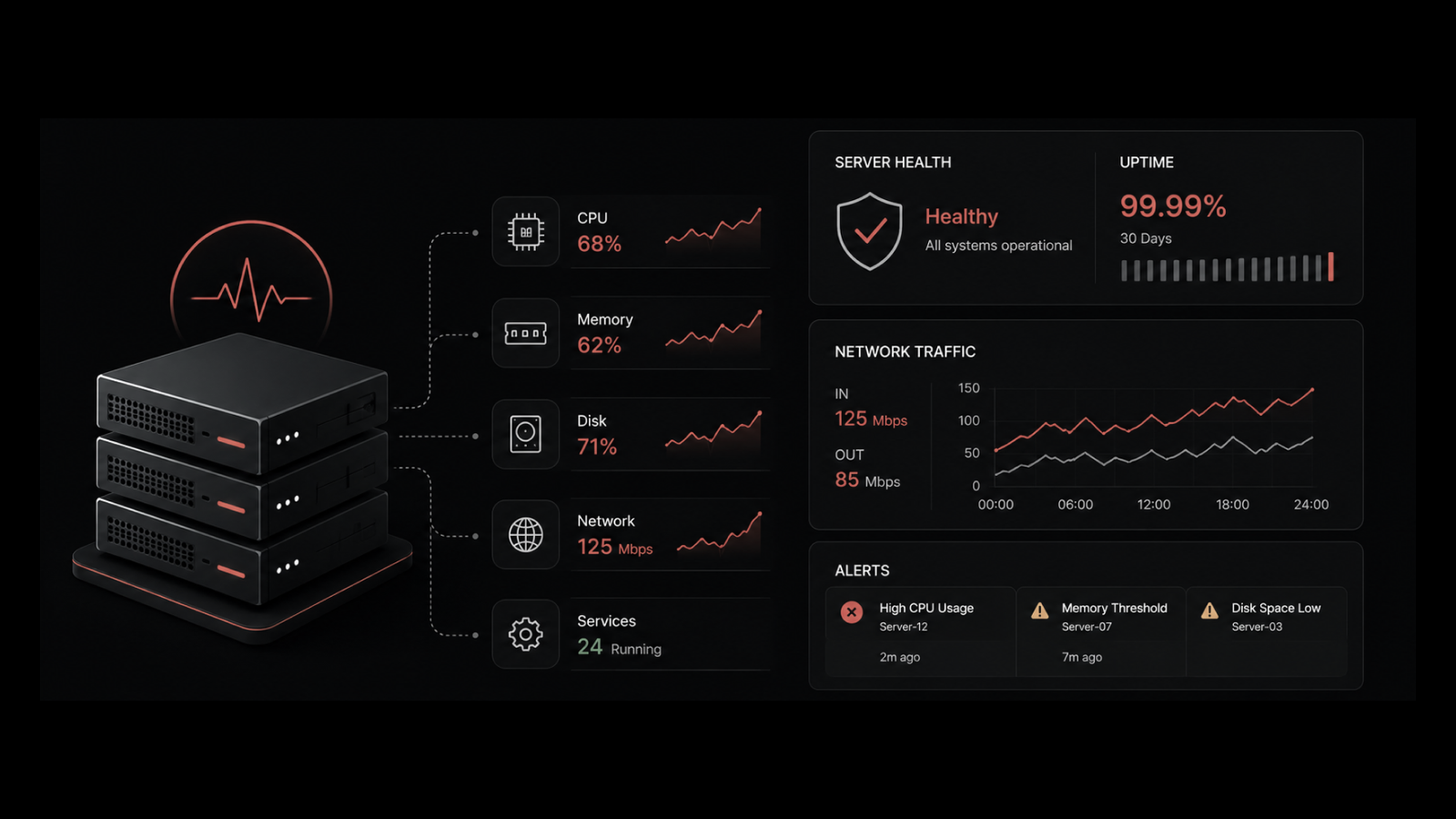
Once customers encounter a service interruption, the underlying issue may have been developing for a considerable period. For businesses running websites, databases, customer portals, and internal applications, spotting these symptoms early can prevent minor technical problems from becoming expensive operational disruptions.
The Trouble With Waiting for Something to Break
Picture an e-commerce business getting ready for its biggest sales weekend. Although the site seems to function normally, the server has less and less free disk space as application log growth exceeds expectations.
If nobody acts in time, the server could have no free storage left during a high-traffic period. Well-organized server monitoring services help recognize conditions such as rising disk usage, abnormal resource usage, service failures, and issues with network connectivity.
Monitoring alone, however, doesn’t resolve an issue. Alerts need suitable threshold settings, clear escalation procedures, and technical staff capable of investigating the underlying problem. Without someone who knows how to respond, a notification has little practical value.
Why Server Maintenance Involves More Than Patching
Regular attention is necessary for operating systems, databases, control panels, and application services. Suitable periods for maintenance are important when evaluating and applying security patches. Changes to configurations need documentation, and performance trends should be reviewed before resource capacity becomes an issue.
Reliable server management services bring these responsibilities together rather than treating them as unrelated technical tasks. For example, installing an update without verifying compatibility with applications can lead to fresh technical difficulties. Before introducing potentially disruptive changes, experienced administrators examine dependencies, plan the changes, and establish recovery options. Backup procedures should receive a similar level of care. A successful backup notification does not necessarily establish that restoration is possible. The effectiveness of recovery processes can be assessed through regular restoration tests.
Different Servers, Different Responsibilities
The operational needs of a cloud-based development environment are different from those of a dedicated server supporting e-commerce.
Windows systems, virtual private servers, hybrid infrastructure, and Linux machines also require different methods of administration. Support should reflect the operating systems, applications, security needs, and anticipated workloads of the business when choosing server managed services.
For organizations operating multiple cloud instances, support may be necessary to maintain consistent configurations and manage resource utilization. A company running older business software may require additional attention to compatibility and controlled updates. Maintenance needs differ between environments, so a universal maintenance schedule is not appropriate.
Why the Response After an Alert Is So Important
Addressing an unavailable production service requires more than simply restarting the affected process. Technical staff should identify the immediate problem, recover service functionality when possible, and examine the reasons behind the incident.
Businesses can obtain assistance with performance issues, troubleshooting, configuration problems, security maintenance, and routine administration through professional server support services. A promise of an incident-free environment is not the aim. Reducing preventable failures, being better prepared to respond, and correcting repeated operational weaknesses are the actual objectives.
Building a More Reliable Operating Routine
Around-the-clock (24/7) server administration, monitoring, maintenance, and technical support are available through Bobcares for businesses operating dedicated servers, VPS environments, hybrid systems, and cloud infrastructure.
Bobcares brings more than 25 years of infrastructure experience to its work with internal teams, helping sustain routine operations and long-term server reliability.
Business owners and IT managers should consider more than whether someone can repair a server after a failure. Before a failure affects customers, are the appropriate people, monitoring routines, maintenance practices, and recovery processes already in place?